Georgian Muhammad Agha
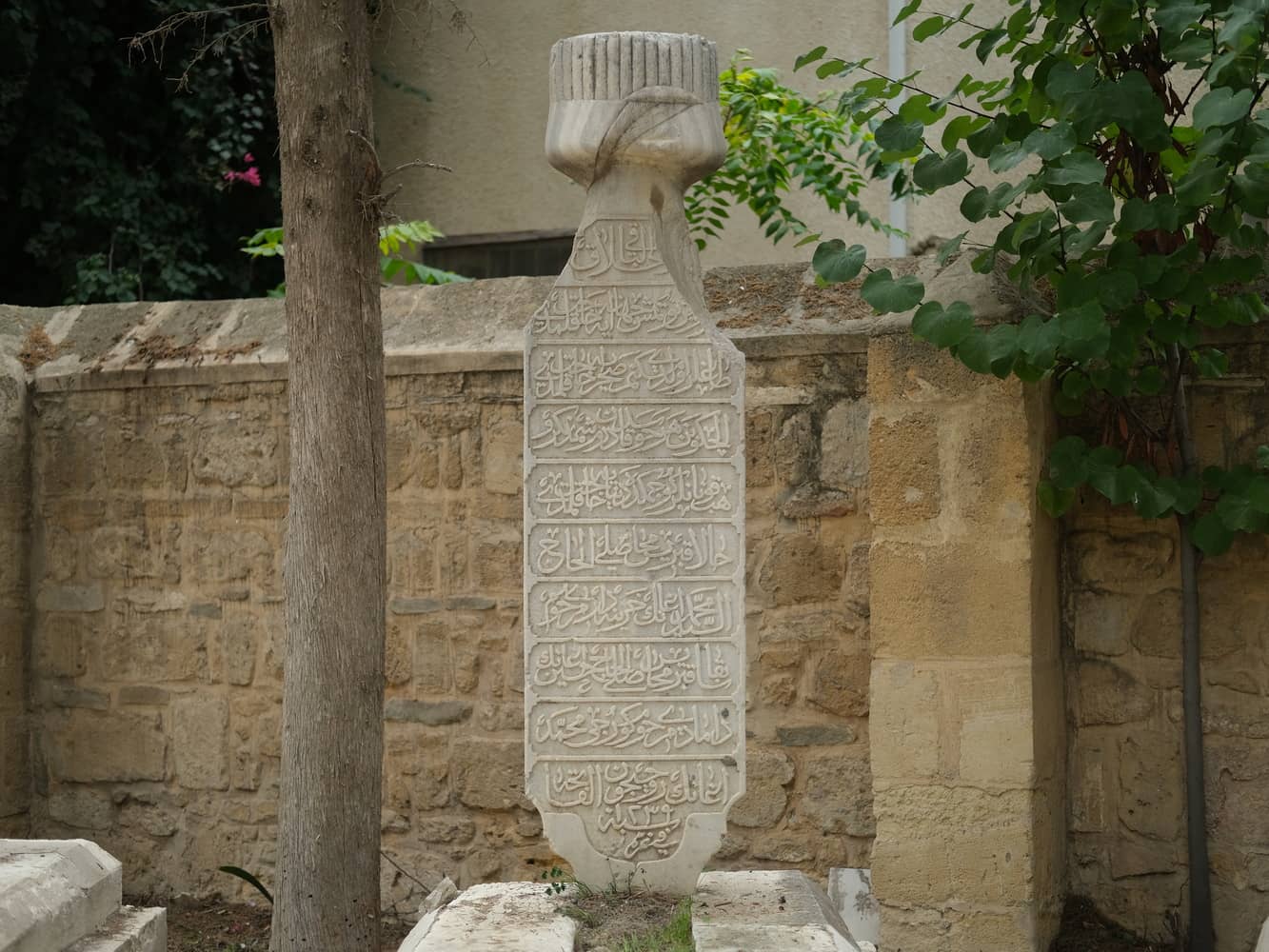
Allah alone is the Eternal Creator.
The decree of His Pen has spread throughout the world; I now have no further need of anything. The mountains have become my dwelling; I no longer have any need for plains or deserts. From now on, I have renounced all desires and passions; such is my destiny. All who come into this world pass away one by one; I no longer have any need for this world. A Fatiha for the soul of the late Georgian Muhammad Ağa, treasurer to El-Hajj Es-Sayyid Muhammad Ağa—who is currently the Tax Collector and Governor of Civil Administration in Cyprus—and son-in-law of El-Hajj Hüseyin Ağa, who previously held the posts of Tax Collector and Governor of Civil Administration in Cyprus.
1239 / M. 1823
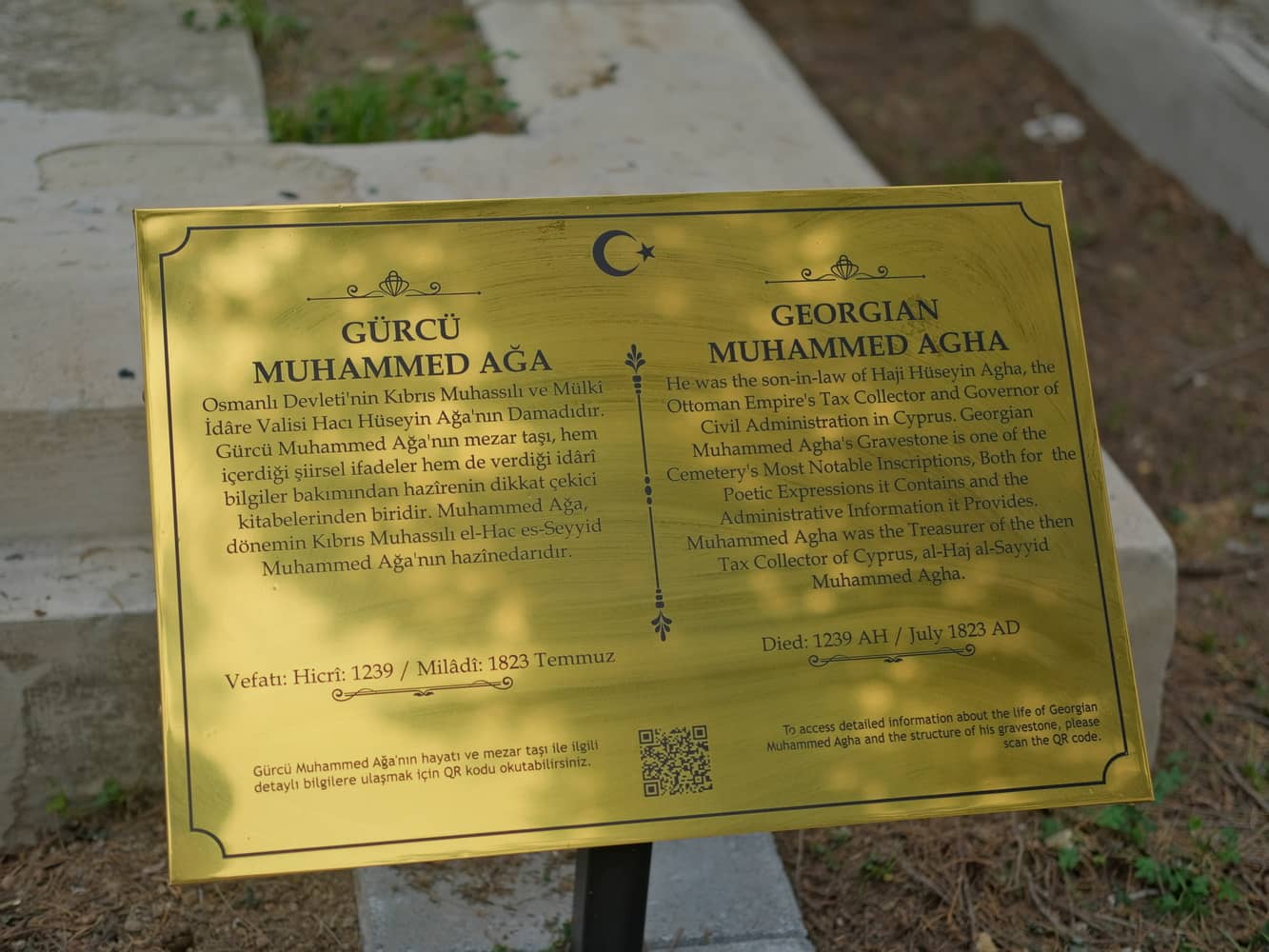
GEORGIAN MUHAMMED AĞA
Treasurer to the Tax Collector of Cyprus and a Member of the Ottoman Provincial Administration
1239 / M. 1823
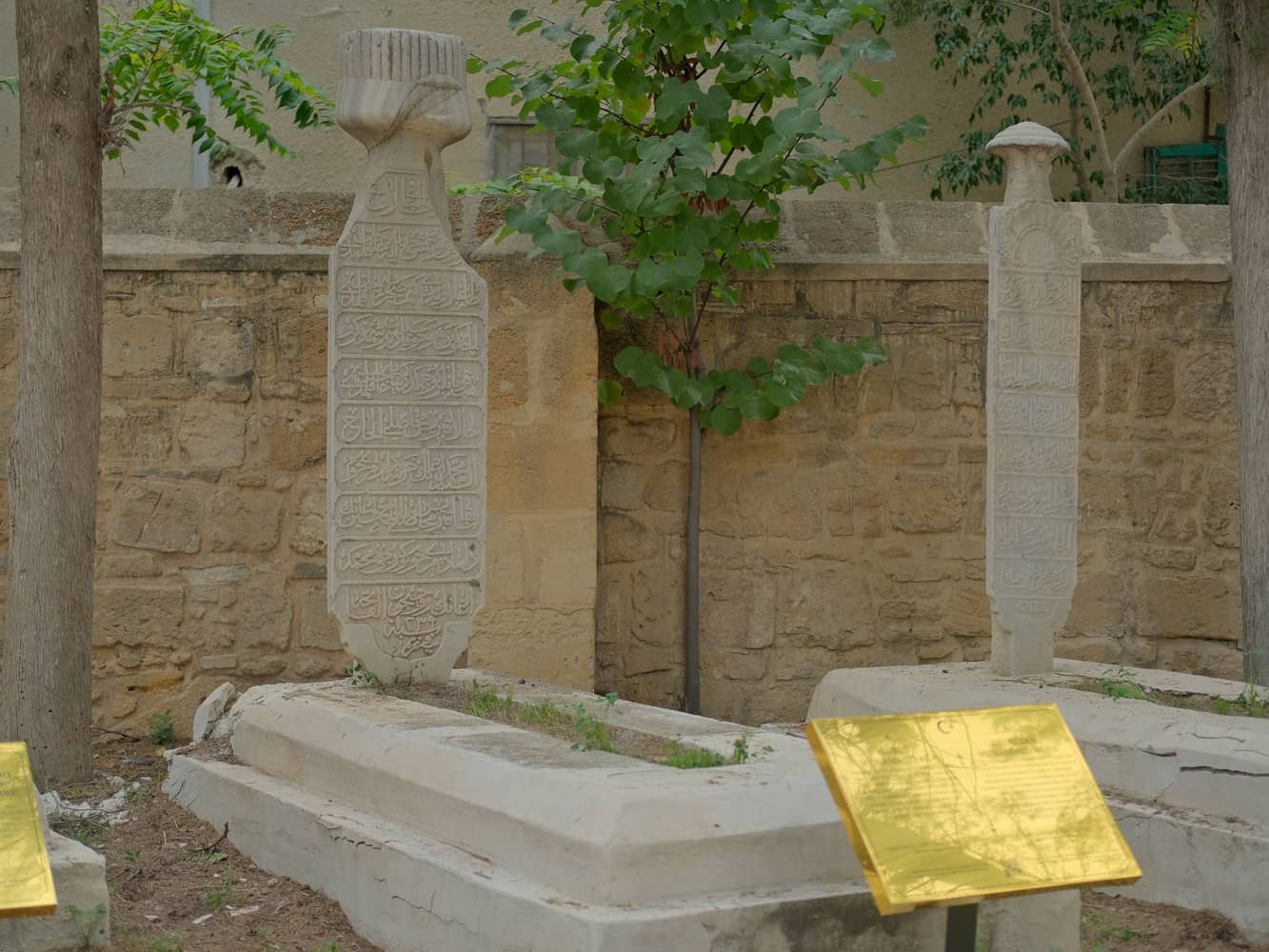
The gravestone of Georgian Muhammed Ağa is one of the cemetery’s most striking inscriptions, both for the poetic expressions it contains and for the administrative information it provides. According to the inscription, Muhammed Ağa was the treasurer of the then Tax Collector of Cyprus, El-Hajj Es-Sayyid Muhammed Ağa. He was also the son-in-law of El-Hajj Hüseyin Ağa, who had previously held the office of Tax Collector of Cyprus.
His role as treasurer indicates that he was part of Cyprus’s high-level administrative circle. As the office of Tax Collector was a position of significant authority within the Cypriot administration of the time—primarily responsible for tax collection and provincial finance—it is noteworthy that Muhammad Ağa was part of the immediate inner circle of the office’s holder.
In addition to detailing Muhammad Ağa’s professional and family connections, the inscription contains a powerful poetic narrative on death and the transience of the world. Expressions such as ‘the mountains have become my home’, ‘to renounce all worldly desires’ and statements declaring that there is no longer any need for the world transform his tombstone from a mere biographical record into a literary example of the nineteenth-century Ottoman understanding of death and transience.