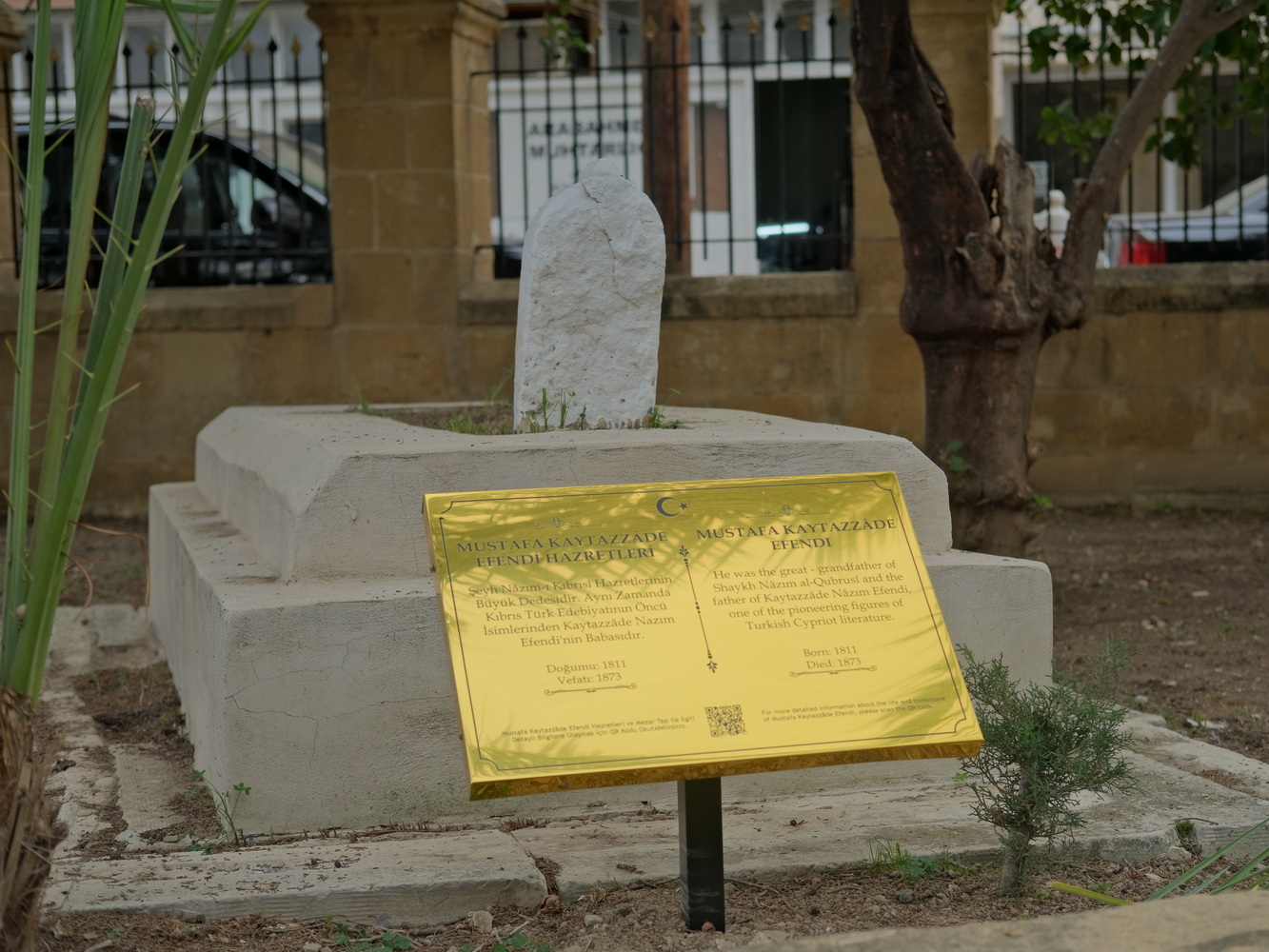
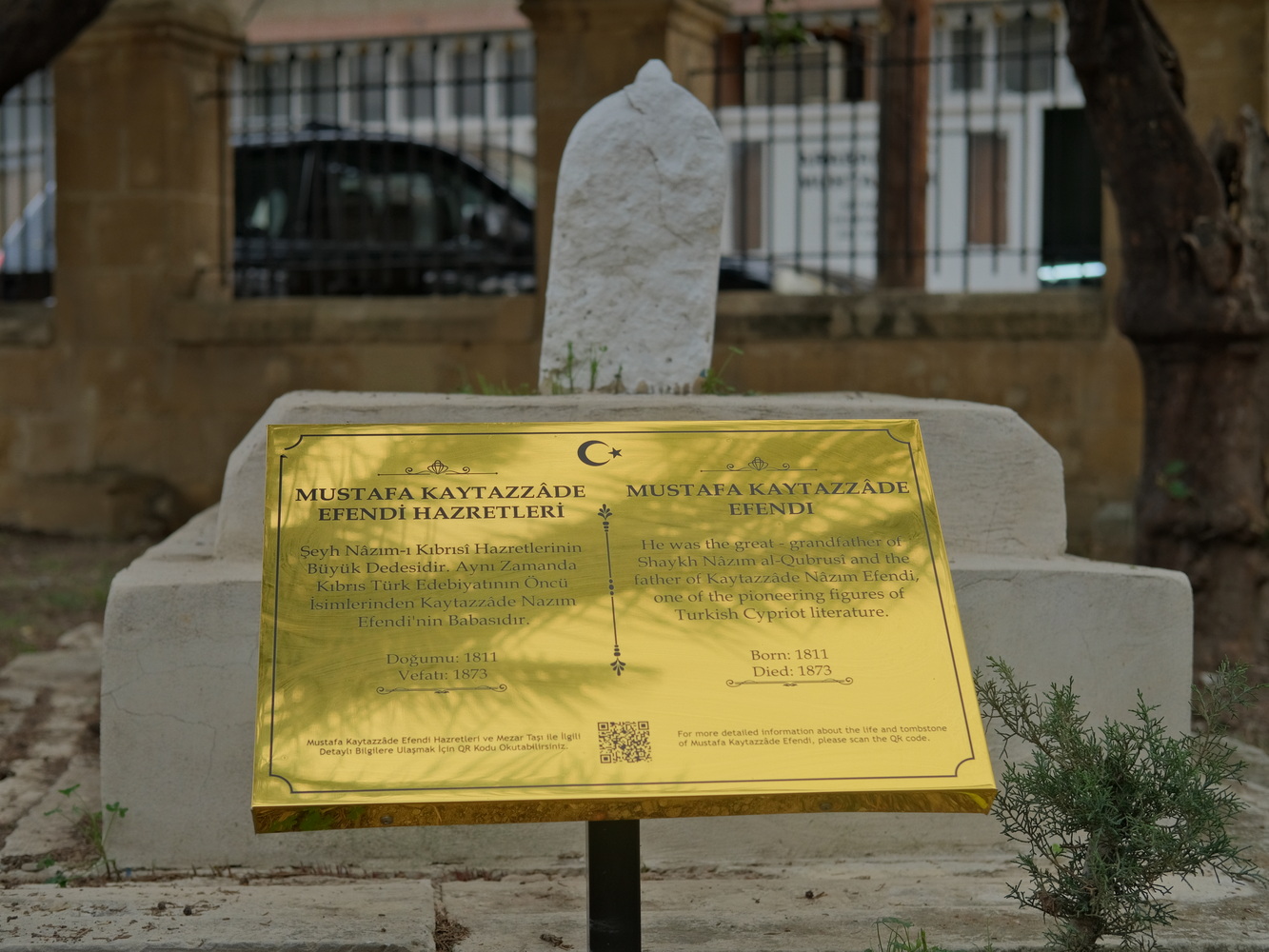
Mustafa Kaytazzâde Efendi Hazretleri
MUSTAFA KAYTAZZÂDE EFENDI
(1811–1873)
Mustafa Kaytazzâde Efendi was born in 1811 and lived in Cyprus during the Ottoman period until his death in 1873. A member of the well-established Kaytazzâde family of Cyprus, he was engaged in the timber trade throughout his life.
Affiliated with the Bektashi Sufi Order, Mustafa Kaytazzâde Efendi was popularly known as “Mustafa Baba.” Renowned for his wit, humour, and engaging conversational style, he was remembered within his community for his distinctive sense of humour and lively personality.
Mustafa Kaytazzâde Efendi was the father of Kaytazzâde Mehmed Nâzım Efendi (1857–1924), a poet and writer regarded as one of the pioneering figures of Turkish Cypriot literature. He was also an ancestor of Sheikh Nâzım al-Qubrusi, one of Cyprus's renowned Sufi spiritual leaders.
His son, Kaytazzâde Mehmed Nâzım Efendi, was born in Nicosia in 1857. He became a prominent poet, writer, and Ottoman civil servant. Throughout his career, he held various administrative positions in Chios, Adana, Istanbul, Izmir, and Bursa. He subsequently returned to Cyprus, where he served as a clerk at the Nicosia Sharia Court.
Recognised as one of the earliest novelists in Turkish Cypriot literature, Mehmed Nâzım Efendi is particularly known for his work Yâdigâr-ı Muhabbet, regarded as the first Turkish Cypriot novel published in book form. His literary contributions also include the novel Leyle-i Visâl, the theatrical work Safâ yahut Netîce-i İbtilâ, and his poetry known under the title Rûh-ı Mecrûh.
Mustafa Kaytazzâde Efendi (1811–1873) remains a noteworthy figure in the social and cultural history of Ottoman Cyprus, remembered for his involvement in the timber trade, his association with the Bektashi tradition, and his witty and sociable character, which earned him the affectionate name “Mustafa Baba.” His memory endures through the literary and spiritual legacy of the Kaytazzâde family, whose contributions have left a lasting mark on the cultural and Sufi heritage of Cyprus.